
Pallet Trucks & Pallet Stacker Trucks
A pallet truck moves a pallet. A pallet stacker truck moves it and lifts it into racking. Between those two jobs sits most of the day-to-day material handling on a warehouse floor, and choosing correctly between them is usually the difference between one machine and two.
Forktruck Solutions supplies, hires and services the full EP range of electric pallet trucks and pallet stacker trucks across the UK – pedestrian and ride-on, from 1,200 kg pedestrian stackers up to 3,000 kg ride-on pallet trucks, most of them running maintenance-free lithium-ion batteries that take a 7% charge in ten minutes.
Pallet truck or pallet stacker truck?
The question comes down to one thing: does the load need to go up?
If pallets only ever travel along the floor – trailer to bay, bay to pick face, line to despatch – a pallet truck is the right machine. The forks lift roughly 170 to 200 mm, just enough to clear the floor, and everything about the truck is built around moving that load quickly and safely rather than lifting it.
If pallets need to go into racking, onto a mezzanine or stacked two high, you need a pallet stacker truck. The mast adds lift height – up to five metres in this range – while keeping the compact footprint and pedestrian or ride-on controls that make these machines easy to place on a busy floor.
Plenty of sites run both, and the split is usually obvious once you count how many pallet movements each shift actually end in a lift. Where almost all of them do, a stacker can replace two machines. Where almost none do, a pallet truck is cheaper to buy, cheaper to run and quicker in the hands of an operator.
Electric pallet trucks
An electric pallet truck lifts a pallet just clear of the floor and moves it – nothing more. That narrow job is exactly why it is the most used machine in most warehouses: it is quick, it fits anywhere a pallet fits, and it takes the physical strain of pulling loaded pallets off your team.
Pedestrian models suit short runs, loading bays and trailer work. Ride-on models earn their place the moment the distances get long or the pallet count per shift climbs – an operator walking 12 km a shift behind a pedestrian truck is slower and more tired than one riding.
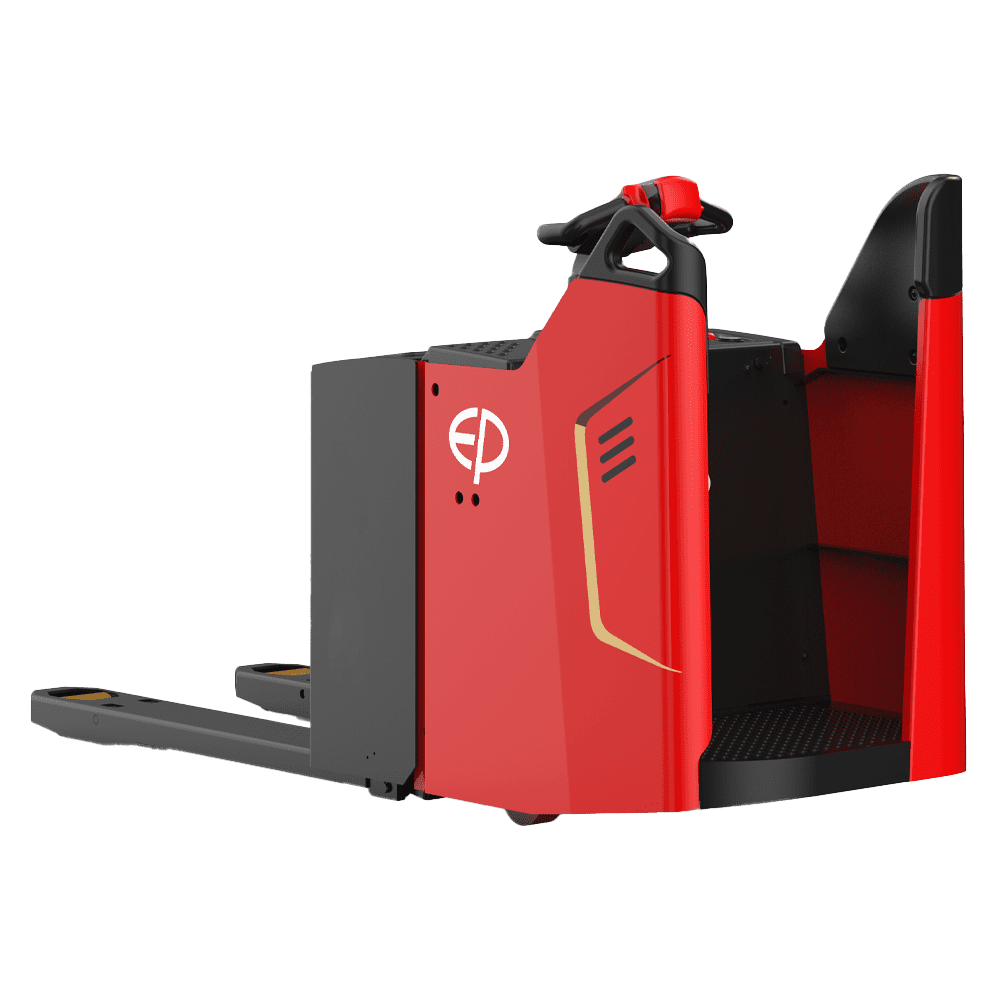
KPL201
KPL201 features a maintenance-free 24V/205Ah Li-Ion battery for 7% charging in just 10 minutes, enhancing productivity during short breaks.
KPL201, the ride-on Li-Ion pallet truck from EP Equipment provides great driving comfort and high performance to load 2 tons of cargo with a fast-driving speed up to 10 km/h. It guarantees operation safety with a great function that allows it to automatically decrease the steering speed.
Features
- 2T Capacity
- Electric Power Steering
- Lateral Battery Exchange
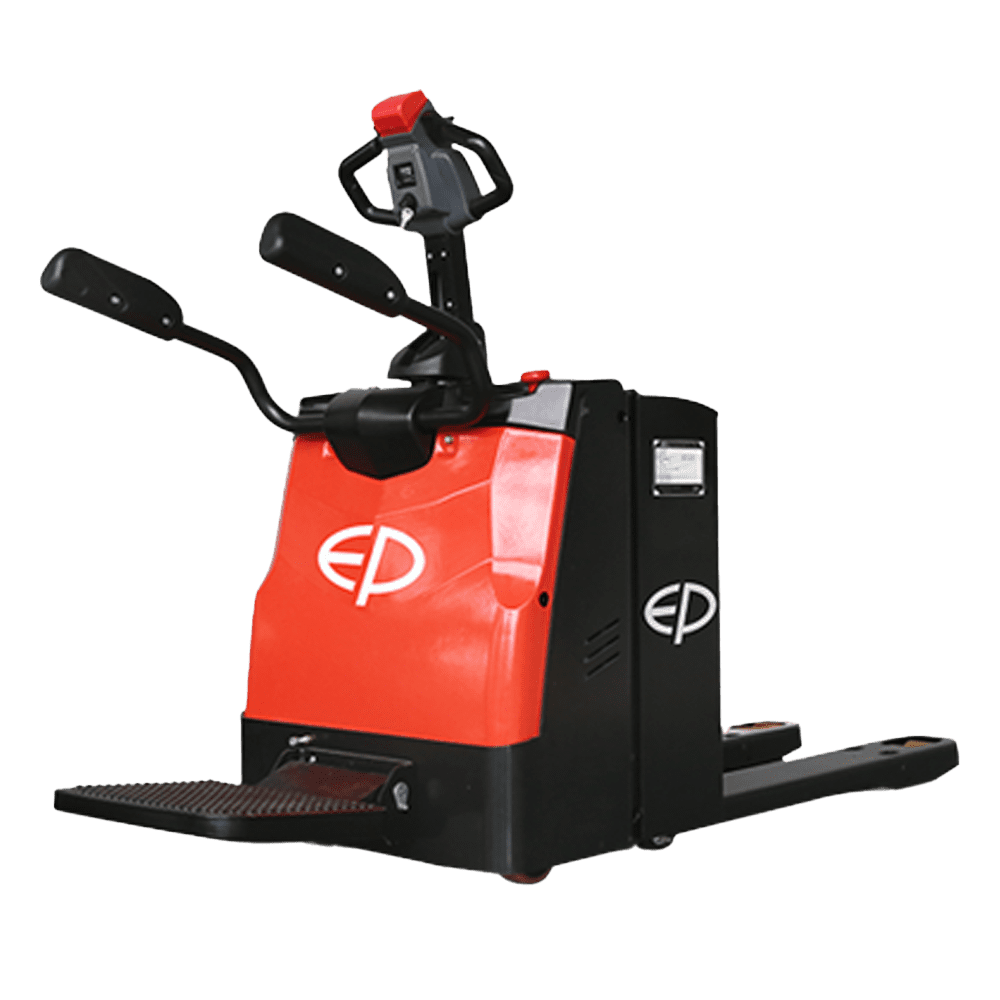
RPL201(H)/251/301
RPL series safety arms, crafted from robust steel, ensure the truck’s longevity. EP’s Li-ion tech delivers 205 AH capacity, offering 7% charging in 10 minutes.
The RPL series is the latest version of the ride-on pallet truck from EP Equipment. They are fully designed around the concept of integrated Li-Ion battery technology and offers quick, opportunity charging and electric power steering are standard. The RPL 201 can be equipped with a high-speed option for even higher productivity. The new released RPL 251 and 301 are able to realize heavy-duty applications and satisfy different working conditions.
Features
- 2T Capacity
- Electric Power Steering
- Lateral Battery Exchange
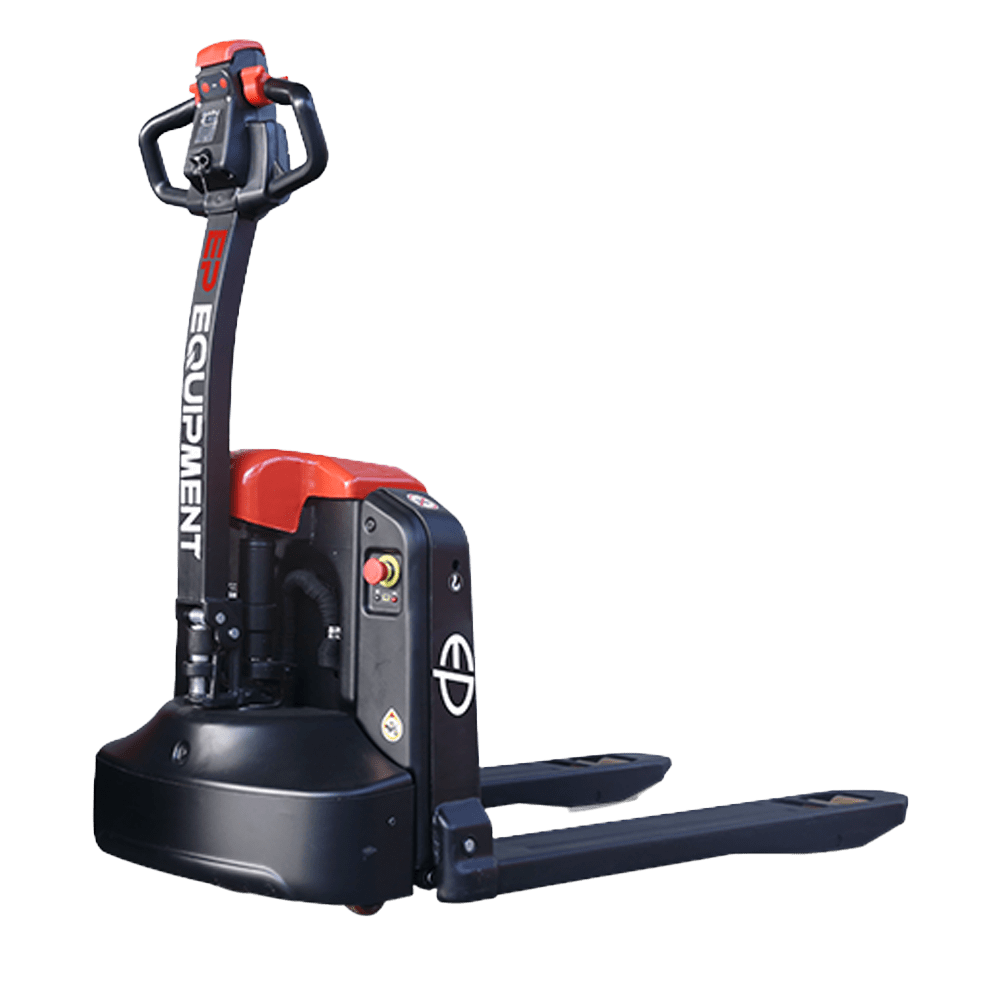
EPL154/185
Featuring a compact Li-Ion battery box. EPL 154 has a 0.75kW motor, while EPL 185 boasts a 0.9kW motor for greater speed and power.
The EPL 154 & EPL 185 is the next generation electric pallet truck from EP Equipment. After creating the product category of entry level pallet trucks with the EPT 20-15ET, EP used the learnings of the past 10 years to develop the next generation. The new trucks are equipped with a newly developed Li-Ion battery and integrated chargers for a maximum in flexibility. Due to its compact size of only 400mm to face of forks, the new EPL trucks are the perfect trucks for any standard application in warehouses, logistics and industry.
Features
- 3 Hour Charge Time
- Capacity 1500kg
- Lateral Battery Exchange
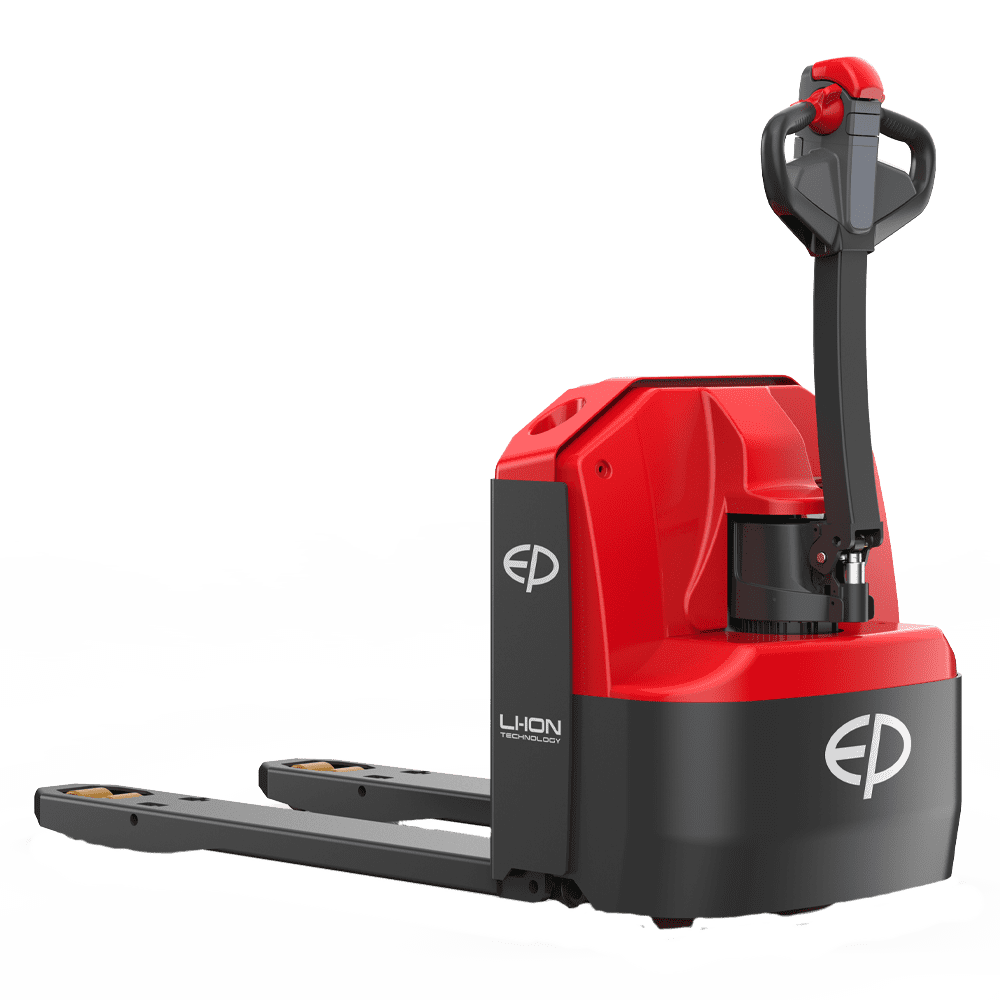
WPL202
WPL202, an upgraded alternative to EPT20-20WA, boasts an ultra-slim design for easier goods transport in tight spaces and offers 50% lower freight costs with 2 units per box.
The WPL202 is a lithium powered pedestrian pallet truck with load capacity of 2.0 ton, ideal for goods transportation in confined and congested spaces. It demonstrates an ultra-slim design, with the chassis length 170mm shorter than EPT20-20WA, which brings better maneuverability and freight costs reduction. The WPL202 is equipped with 24V100Ah Li-ion battery and 24V30A integrated charger and effectively boost productivity due to opportunity charging. The upgraded castor wheels increase stability during walking on uneven roads and ramps. Additionally, it offers an option for customers who need to operate in refrigerated warehouses.
Features
- 2000kg Capacity
- 1320mm Turning Radius
- Lateral Battery Exchange
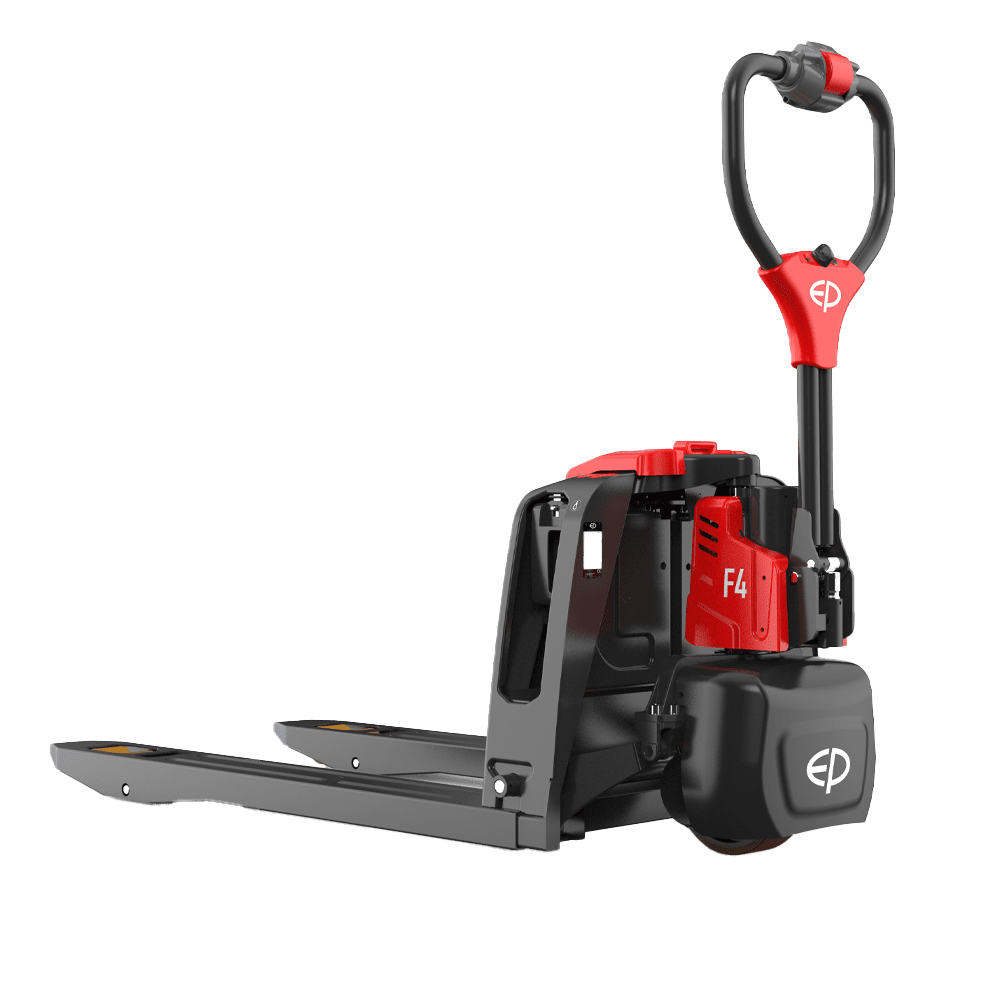
F4
The F4 offers versatility with a dual power slot design, making it suitable for various applications, from occasional use to heavy-duty tasks, cost-effectively.
The F4 stands as the F series’ most adaptable truck, courtesy of its unique configuration. With a dual battery slot design, it’s a versatile choice for diverse applications, offering two battery options to suit both occasional use and long shifts. EP’s innovative platform-based design optimizes the F4’s packaging, allowing efficient shipping with 30%-40% savings compared to EPT 12EZ, accommodating 176 units in a 40′ container.
Features
- Single Battery for Occasional Use
- Dual Batteries for Heavy-Duty Use
Pallet stacker trucks
A pallet stacker truck does everything a pallet truck does, then lifts the load into racking, onto a mezzanine or on top of another pallet. Lift heights in this range run up to five metres, which covers low-level and mid-level racking without the aisle width, cost or training burden of a counterbalance forklift.
Pedestrian stackers suit stock rooms, mezzanines and back-of-store racking. Ride-on and double-deck models combine stacking with long-distance transport, so one machine does the work of a pallet truck and a stacker on sites where the racking is a long walk from the bay.
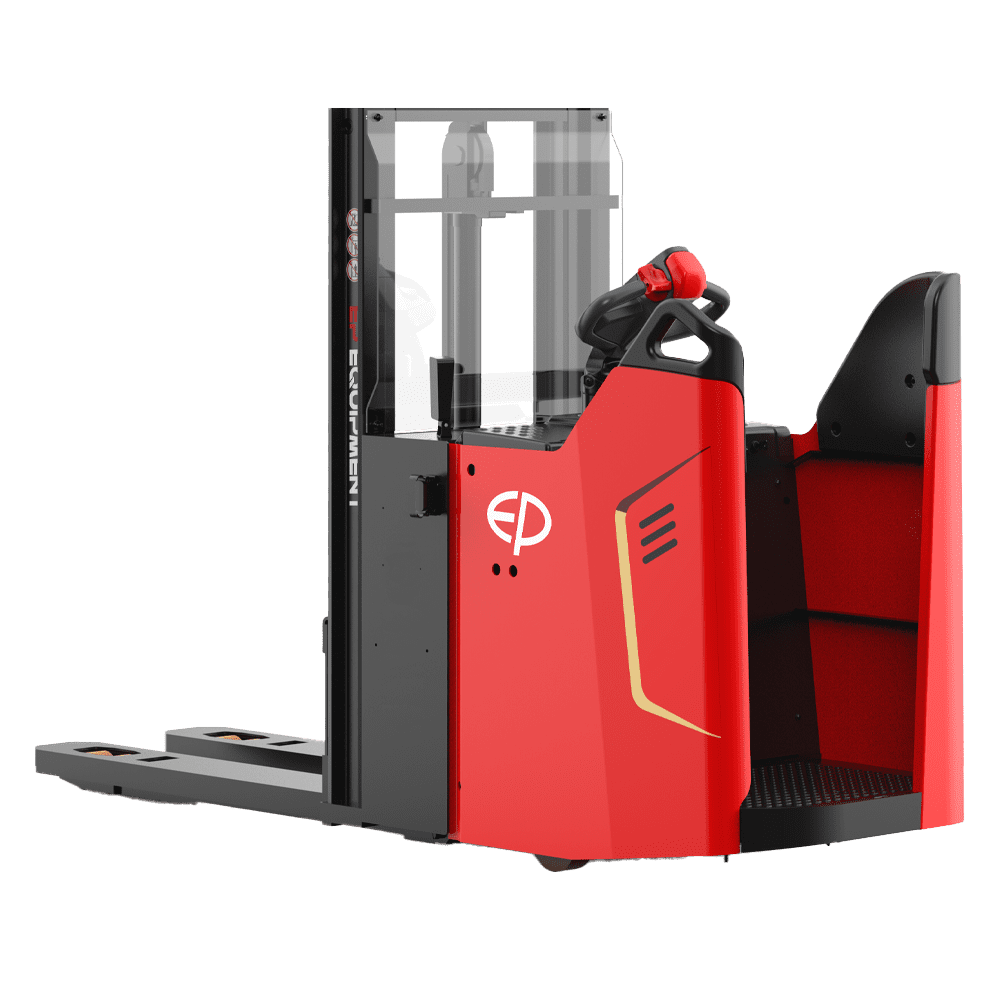
KSi201
The KSi201 combines the stacking ability with EP’s hot seller, KPL201 ride-on pallet truck but doubles the efficiency when it comes to transportation and storage.
The KSi201 is a ride-on double-deck stacker with 2.0 ton load capacity designed for long-distance applications. Equipped with a Li-ion battery and an integrated charger as standard, the model increases uptime thanks to its opportunity and flexible charging and zero maintenance battery. KSi201 comes with a spacious stand-on platform and semi-enclosed protection as well as a compact design fulfilling safe, comfortable and agile driving. The double-deck truck offers goods visibility and makes it easy to pick up stack and retrieve pallets.
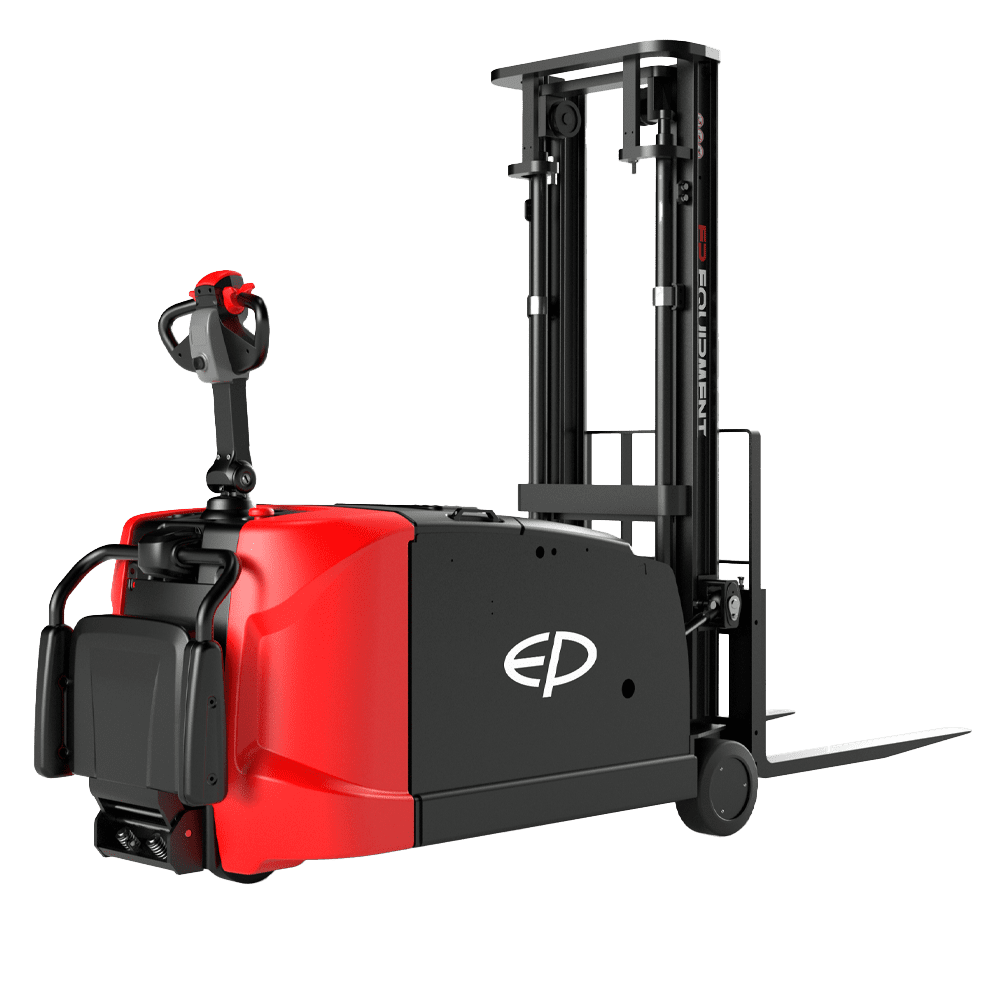
RSC152/202
The RSC series surpasses the ES-CS with standard high ground clearance and proportional lifting, enhancing off-road capability and pallet storage precision.
The RSC series is an electric counterbalance stacker, able to handle loads weighing 1.5 to 2.0 ton at heights up to 5.0m. With the rigid mast and forks, this lifter can accommodate all types of pallets and offers ease of loading and unloading various loads. It features a proportional lifting system as standard for precise and convenient operation. Thanks to its high ground clearance, operators can drive the RSC series to cope with rugged road conditions. The truck also demonstrates great agility with a turning radius of 1707/1915mm, perfect for transportation in confined spaces.
Features
- 1500kg Capacity
- 5000mm Lifting Height
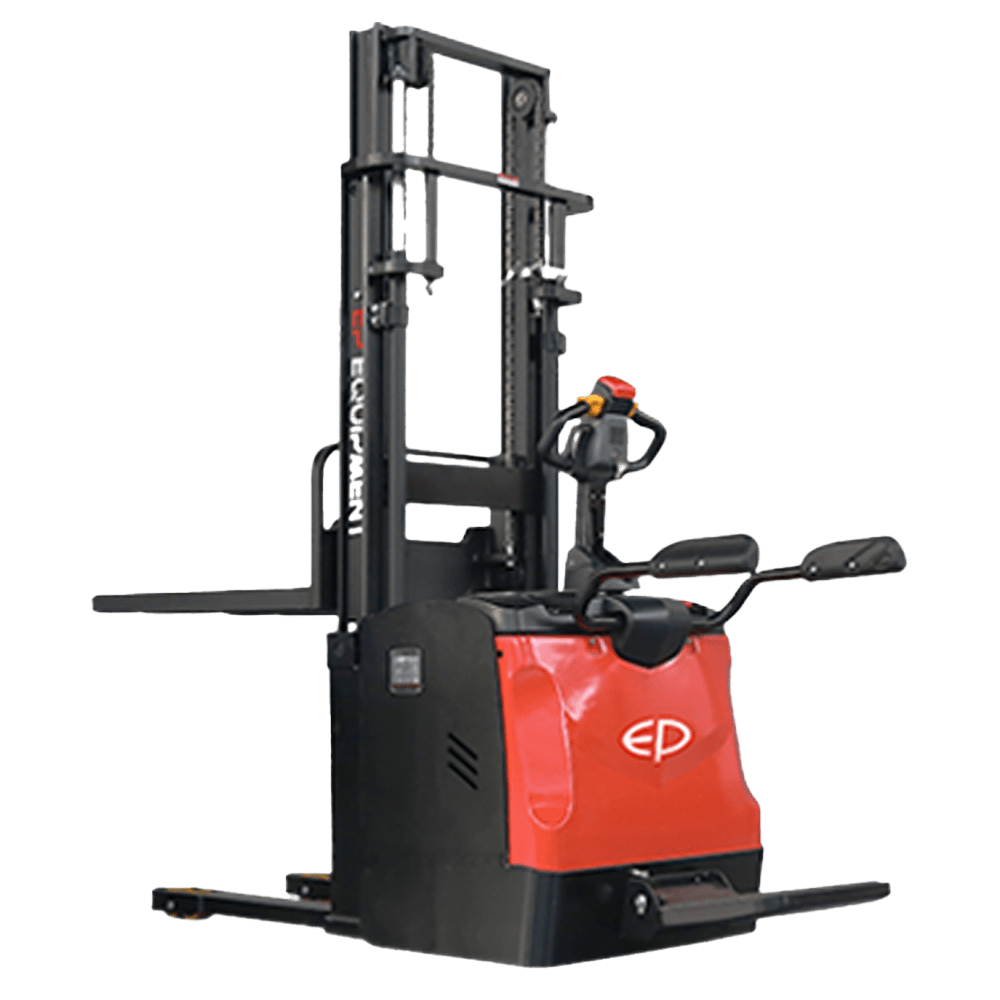
ES16-RS
The ES16-RS has many great features that will help you improve your daily operations. Find out more.
The Electric Stacker ES16-16RAS is the perfect choice if you are looking for a compact, but powerful electric pallet stacker. Due to its AC engine and the 125Ah AGM batteries, this truck is much smaller than common 1.5 to electric stackers.
Features
- 1600kg Capacity
- 2912mm Lifting Height
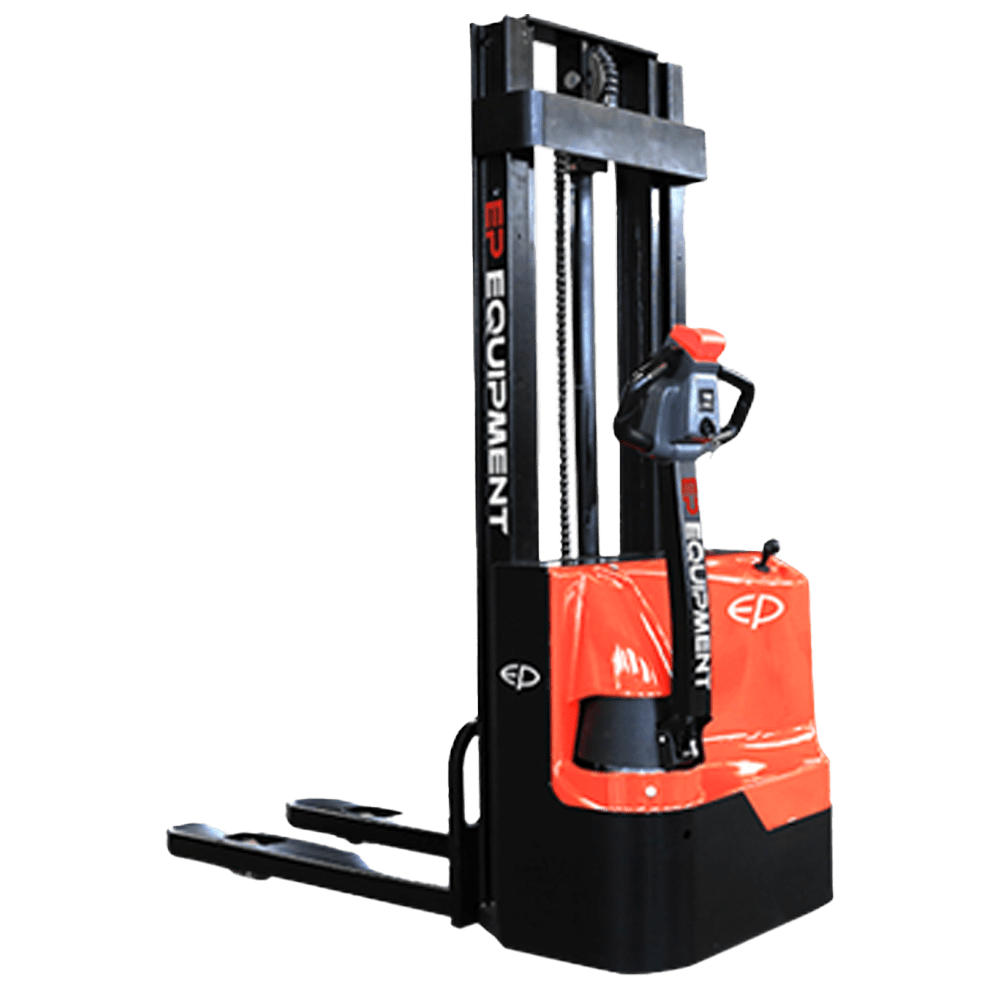
ES15-15ES
The ES 15-15ES Electric Stacker is an ideal compact, yet powerful choice. With an AC engine and 125Ah AGM batteries, it outperforms standard 1.5-ton stackers.
The Electric Stacker ES 15-15ES is the perfect choice if you are looking for a compact, but powerful electric pallet stacker. Due to its AC engine and the 125Ah AGM batteries, this truck is much smaller then common 1.5to electric stackers.
Features
- 1200kg Capacity
- 2927mm Lifting Height
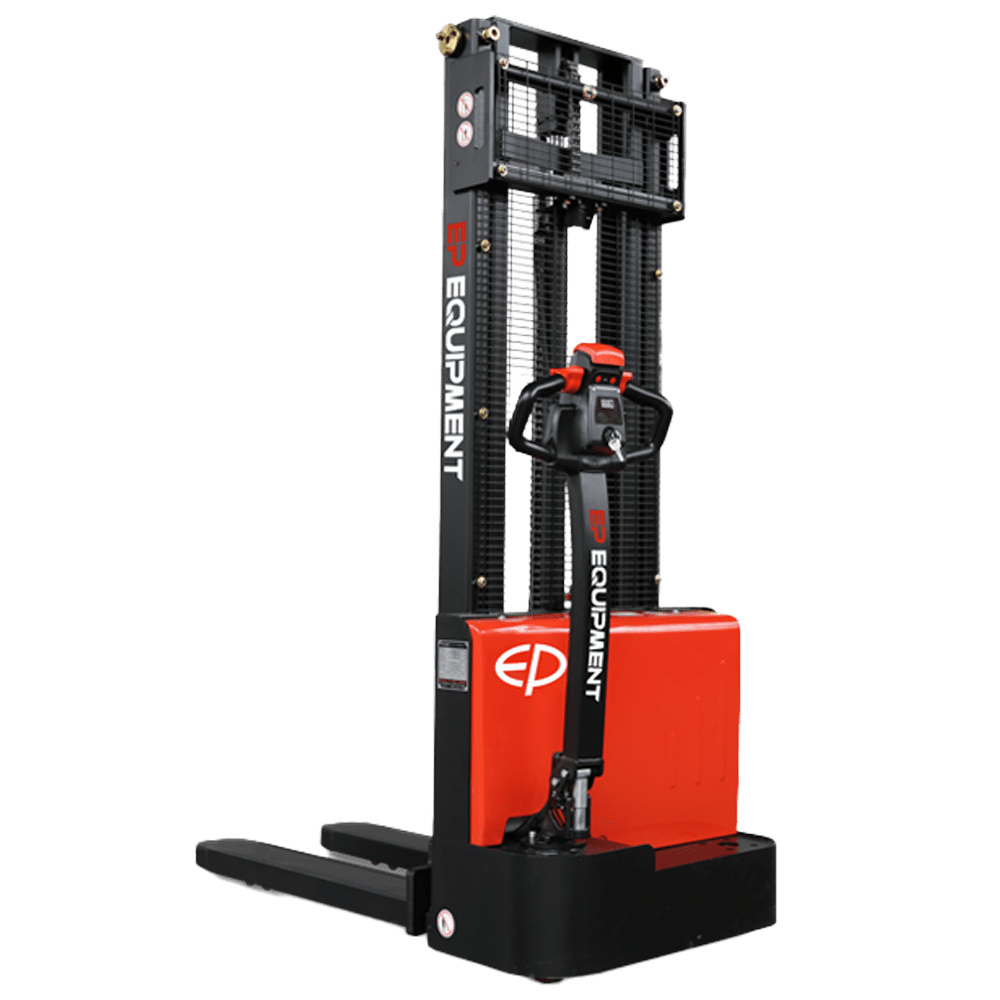
EST(L)122
EP excels in stability, backed by decades of electric stacker research and development, providing unmatched stability in its price range.
The ESL122 is a 24V/80Ah Li-ion powered electric stacker while the EST122 is equipped with 24V/85Ah AGM battery. The EST(L)122 is fitted with the high-strength chassis and high rigidity mast that ensure great operation stability. These two models are able to provide comfortable manoeuvrability and efficient and effective vertical stacking and are ideal for operating in confined spaces.
Features
- 1200kg Capacity
- 3615mm Lifting Height
Which pallet truck is right for you?
| Manual pallet truck | Electric pallet truck | Pallet stacker truck | |
|---|---|---|---|
| Typical capacity | Up to 2,500 kg | 1,500–3,000 kg | 1,200–2,000 kg |
| Lift | Floor clearance only | Floor clearance only (approx. 170–200 mm) | Up to 5.0 m |
| Operator | Pump and pull by hand | Pedestrian or ride-on | Pedestrian or ride-on |
| Power | None | Lithium-ion | Lithium-ion |
| Best for | Occasional moves, vans, small sites | Repeated moves, long runs, trailer loading | Racking, mezzanines, double-stacking |
| FTS models | Available on request | EPL154/185 electric pallet truck, WPL202 pallet truck, KPL201 electric pallet truck, RPL201H/251/301 powered pallet truck, F4 pallet truck | ES15/15ES pallet stacker, ES16-RS pallet stacker, ESTL122 stacker, RSC152/202 stacker, KSi201 pallet stacker |
Capacities and lift heights vary by model and battery specification. Tell us your pallet weights, racking height and shift pattern and we will confirm the right machine.
Where pallet trucks and stackers are used
- Warehousing and distribution – trailer unloading, bay to pick face, replenishment and despatch marshalling.
- Manufacturing – feeding production lines with raw material and clearing finished goods without engine fumes indoors.
- Retail and supermarkets – back-of-store deliveries, cage and pallet movement, overnight replenishment in occupied buildings.
- Food and cold storage – clean, zero-emission handling in chilled and hygiene-controlled areas.
- Builders merchants and trade counters – heavy, awkward stock moved between yard racking and the counter.
- Transport and parcel hubs – fast trailer loading and unloading where ride-on machines earn their keep on distance alone.
Where pallets need to go higher than five metres or into narrow aisles, the job moves to a reach truck; for yard work and loading bays, a counterbalance forklift. For case picking rather than full pallets, see order pickers and AGVs.
Lithium-ion batteries and charging
Most of the EP range runs maintenance-free lithium-ion batteries, and on pallet trucks in particular that changes how the machine fits into a shift.
Opportunity charging. A 7% top-up in around ten minutes means a break or a gap between trailers keeps the truck going. There is no memory effect, so partial charging does no harm.
No battery changing, no charging room. Sealed lithium batteries need no watering, produce no gassing and need no dedicated ventilated area – which removes both the floor space and the labour that multi-shift lead-acid operations lose to battery swaps.
Consistent performance. Lithium holds its voltage to the end of the cycle, so lift and travel speeds do not tail off in the last hour of a shift the way they do on a tired lead-acid pack.
On single-shift sites with a predictable round, lead-acid can still be the cheaper answer. We will compare both against your actual usage rather than assume.
Pallet truck training, safety and thorough examination
Pallet trucks and stackers are work equipment, and stackers are also lifting equipment, which brings two separate sets of obligations.
Training. Operators of powered pallet trucks and stackers need accredited training for the machine type they are using. A counterbalance forklift ticket does not cover a ride-on pallet truck or a stacker, and the pedestrian and ride-on versions are assessed differently.
Thorough examination. A pallet stacker truck lifts loads and so falls under LOLER – it must be thoroughly examined at least every 12 months, separately from routine servicing. Pallet trucks that only lift to floor clearance are covered under PUWER instead, but still need maintenance and inspection.
Daily checks. Forks, wheels, hydraulics, brakes, horn and the emergency reverse button should be checked before each shift. On pedestrian machines the tiller-mounted safety controls are the ones that matter most and the ones most often found faulty.
See servicing and repairs – we can cover statutory inspection and planned maintenance under one contract.
Pallet trucks for sale, hire and lease
If you are looking for a pallet truck for sale outright, we supply the full EP range new, with warranty and a service contract from day one. If the machine is covering a peak, a contract or a gap in the fleet, short-term hire is usually the better answer – and long-term hire, contract hire and lease all spread the cost without tying up capital. See our hire and leasing options.
Whichever route you take, the machine is supported by our own directly employed engineers rather than a subcontractor, covering planned maintenance, breakdown cover, parts, battery support and thorough examination.
On larger fleets, telematics pays for itself on impact damage alone – pallet trucks take more knocks than any other machine on site. Find out about fleet telematics.
GET IN TOUCH
Every business is different so Goupil adapts to every application in offering tailored solutions.
T: 01924 265623
Pallet truck FAQs
What is a pallet truck used for?
A pallet truck is used to lift a pallet just clear of the floor and move it horizontally – unloading trailers, moving stock from the bay to the pick face, feeding production lines and marshalling pallets for despatch. It is not designed to lift loads into racking; that is the job of a pallet stacker truck. Pallet trucks are the most used machine in most warehouses because they are quick, they fit anywhere a pallet fits and they take the physical strain out of moving loaded pallets by hand.
What is a pallet stacker truck?
A pallet stacker truck is a powered pallet truck with a mast, so it can lift a load as well as move it. Lift heights in this range reach up to five metres, which covers low and mid-level racking, mezzanine levels and stacking pallets two high. It gives you most of the usefulness of a forklift in a machine that is narrower, cheaper to run and easier to place on a busy warehouse floor.
What is the difference between a pallet truck and a stacker?
A pallet truck lifts the forks only far enough to clear the floor, roughly 170 to 200 mm, and is built for moving pallets along the ground. A pallet stacker truck adds a mast so the load can be lifted into racking, onto a mezzanine or on top of another pallet. If your pallets only ever travel along the floor, a pallet truck is the cheaper and faster machine; if they need to go up, you need a stacker.
Are pallet trucks electric or manual?
Both are available. A manual pallet truck is pumped and pulled by hand, costs least and suits occasional moves, van deliveries and small sites. An electric pallet truck powers both the lift and the drive, and is the right choice as soon as the moves become repetitive, the distances get long or the loads get heavy. Forktruck Solutions supplies electric pallet trucks in pedestrian and ride-on form, most of them running lithium-ion batteries.
How much can a pallet truck lift?
Manual pallet trucks typically handle up to around 2,500 kg. Electric pallet trucks in our range run from 1,500 kg up to 3,000 kg depending on model, and pallet stacker trucks from 1,200 kg up to 2,000 kg – capacity comes down as lift height goes up. The figure that matters is capacity at your actual load centre and lift height, which we confirm before quoting.
How high does a pallet stacker truck lift?
Models in our range lift from around 2.9 metres up to 5.0 metres. The right mast is set by your top beam height rather than the machine, and you need to allow for headroom, sprinklers and the residual capacity at full lift. We measure the racking and confirm the mast against it.
Do you need training to use a pallet truck?
Yes, for powered machines. Operators of electric pallet trucks and pallet stacker trucks need accredited training for the specific machine type – a counterbalance forklift ticket does not cover a ride-on pallet truck or a stacker, and pedestrian and ride-on versions are assessed separately. Manual pallet trucks do not require a formal ticket, but employers still owe safe-use instruction and manual handling training.
Do pallet stacker trucks need a LOLER thorough examination?
Yes. A pallet stacker truck lifts loads, so it is lifting equipment under LOLER and must be thoroughly examined at least every 12 months, separately from routine servicing. Pallet trucks that only lift to floor clearance fall under PUWER instead, so they need maintenance and inspection but not a LOLER thorough examination.
How long does a lithium-ion pallet truck battery take to charge?
The EP lithium-ion batteries take a 7% charge in around ten minutes, so breaks and gaps between trailers keep the machine topped up through the day, with a full charge typically done overnight. Lithium has no memory effect, so opportunity charging does not shorten battery life, and the batteries are sealed and maintenance-free – no watering, no gassing and no dedicated charging room.
Should I buy or hire a pallet truck?
If the machine is a permanent part of the operation, buying outright or on lease usually works out cheapest over its life, and we supply the full EP range new with warranty. If it is covering a peak season, a fixed-term contract or a gap while another machine is repaired, short-term hire avoids tying up capital. Contract hire sits between the two and bundles servicing and breakdown cover into one monthly figure.
Who services pallet trucks and stackers?
Forktruck Solutions services them with its own directly employed engineers, covering planned maintenance, breakdown repairs, parts, battery support and LOLER thorough examination on stackers. Pallet trucks and stackers can go on the same service contract as your forklift and reach truck fleet, so the whole site sits under one agreement and one point of contact.